Ground improvement in Albuquerque is not merely a construction preference — it is a fundamental engineering necessity. The category encompasses a suite of specialized geotechnical techniques designed to alter the physical properties of native soils, increasing bearing capacity, mitigating settlement, and enhancing stability. From the sprawling residential developments on the city's west mesa to critical infrastructure along the Rio Grande corridor, the performance of a structure is dictated by what lies beneath it. Without targeted intervention, the region's challenging subsurface conditions can lead to differential settlement, structural distress, and costly failures. This discipline integrates rigorous site investigation with mechanical and hydraulic modification methods, ensuring that the ground itself becomes a reliable structural element rather than a variable risk.
The local geology of the Albuquerque Basin dictates this necessity. Much of the metropolitan area is underlain by deep deposits of alluvial sands, silts, and gravels eroded from the Sandia Mountains and ancestral Rio Grande. These granular soils are often in a loose to medium-dense state, making them inherently susceptible to settlement under load. More critically, the region contains extensive zones of collapsible and hydro-compactive soils, particularly in the foothill areas and older alluvial fans. When these moisture-sensitive silty soils are wetted — whether by landscape irrigation, utility leaks, or seasonal monsoon rains — they can undergo a rapid and significant reduction in volume, often causing sudden foundation distress. Addressing these conditions requires a nuanced understanding of unsaturated soil mechanics, often beginning with a detailed unsaturated soil analysis to quantify the collapse potential before any treatment strategy is selected.
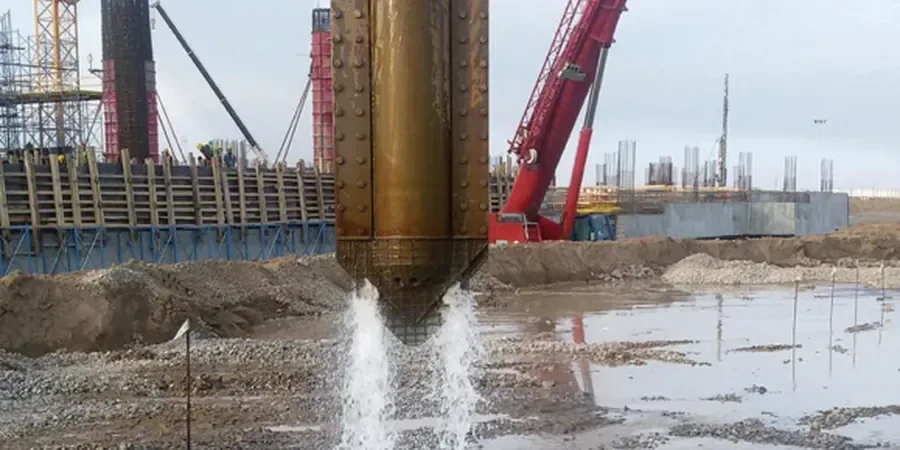
Regulatory compliance in Albuquerque is governed by a combination of national standards and local jurisdictional amendments. All ground improvement designs must adhere to the current editions of the International Building Code (IBC) as adopted by the City of Albuquerque, supplemented by the New Mexico Commercial Building Code. Geotechnical investigations are mandated to follow the standards set by the American Society for Testing and Materials (ASTM), particularly ASTM D698 and D1557 for compaction criteria. Crucially, the City of Albuquerque’s Development Services Division requires a signed and sealed geotechnical report that explicitly addresses soil bearing capacity and settlement mitigation for any commercial or multi-family residential project. For improvement methods that introduce foreign materials or deep mixing, such as deep soil mixing (DSM) design, compliance with environmental subsurface injection permits from the New Mexico Environment Department may also be triggered to protect the regional groundwater aquifer.
The application of these techniques spans a broad spectrum of project types across the Duke City. Large-scale commercial warehouses and distribution centers in the Mesa del Sol area frequently require dynamic compaction design to densify loose sands economically over vast footprints. For essential infrastructure like bridge approaches and roadway embankments over the soft, saturated clays of the Rio Grande floodplain, prefabricated vertical drain (PVD) design is critical to accelerate consolidation and achieve strength gain within tight construction schedules. Meanwhile, mid-rise structures and hospitals near the University district often rely on rigid inclusion systems or stone column design to reinforce the variable alluvium, providing a high-performance foundation solution that bridges the gap between deep foundations and shallow footings. Each project demands a tailored approach, balancing subsurface constraints with structural performance requirements.
Available services
Unsaturated soil analysis
→ Ver detalleStone column design
→ Ver detalleDynamic compaction design
→ Ver detalleDeep Soil Mixing (DSM) design
→ Ver detalleGeotechnical drainage design
→ Ver detallePrefabricated vertical drain (PVD) design
→ Ver detalleGrouting design
→ Ver detalleJet grouting design
→ Ver detallePreloading design (without surcharge)
→ Ver detallePreloading with surcharge design
→ Ver detalleVibrocompaction design
→ Ver detalleGeogrid specification
→ Ver detalleGeomembrane specification
→ Ver detalleLime and cement stabilization
→ Ver detalleLandfill geotechnics
→ Ver detalleGeotechnical instrumentation (design and installation)
→ Ver detalleOrganic soil management
→ Ver detalleContaminated soil remediation
→ Ver detalleQuick answers
What is the primary purpose of ground improvement in geotechnical engineering?
The primary purpose is to permanently alter the physical characteristics of native soil to meet specific engineering demands. This involves increasing shear strength and bearing capacity, reducing compressibility and settlement potential, and controlling permeability. In regions with problematic soils, like Albuquerque, the goal is to mitigate geohazards such as collapsible or expansive behavior, transforming the ground into a stable, predictable, and constructible medium for structural loads.
How do I know if my Albuquerque site requires soil improvement rather than a standard foundation?
The necessity is determined by a comprehensive geotechnical investigation. If the report identifies loose alluvial sands with Standard Penetration Test (SPT) N-values below 15, or collapsible silts with a significant collapse index, improvement is often mandatory. The decision hinges on whether the native soil's bearing capacity meets the IBC-prescribed safety factor of 3.0 against shear failure, and whether predicted total and differential settlements exceed the tolerable limits for the proposed structure.
What is the difference between deep dynamic compaction and shallow compaction techniques?
Deep dynamic compaction involves repeatedly dropping a heavy weight from a significant height to densify granular soils to depths of up to 30 to 40 feet by propagating low-frequency energy waves. Shallow compaction, conversely, relies on vibratory rollers or plate compactors that only influence the top few feet. Deep methods are suited for treating thick, loose alluvial deposits on a macro-scale, while shallow methods are typically limited to subgrade preparation for pavements or floor slabs.
Are ground improvement methods environmentally compliant in Albuquerque?
Yes, when designed and executed properly. Techniques like mechanical compaction are purely physical and have minimal environmental impact. However, methods involving grout injection, such as chemical or jet grouting, require careful hydrogeological assessment to prevent aquifer contamination. These must comply with the New Mexico Environment Department’s groundwater quality standards and often require a subsurface discharge permit to ensure that introduced materials do not migrate beyond the treatment zone into the potable water supply.